

PERIMENOPAUSE & MENOPAUSE
Navigating menopause
When your body starts to feel different, it can be hard to know what it needs. Weight gain, trouble sleeping, mood shifts or changes in energy levels can creep in gradually.
We help you make sense of peri/menopause symptoms and create a clear path forward.
LOW ENERGY
•
WEIGHT CHANGES
•
BRAIN FOG
•
MOOD SWINGS
•
HOT FLUSHES
•
FATIGUE
•
ANXIETY
•
LOW ENERGY • WEIGHT CHANGES • BRAIN FOG • MOOD SWINGS • HOT FLUSHES • FATIGUE • ANXIETY •
There’s more to menopause than symptom relief
“Many of the women we work with feel like they are losing control of their own bodies. During perimenopause, hormones can fluctuate significantly, with some women experiencing up to 3x more oestrogen than in their 30s - one reason symptoms can feel intense and unpredictable.
But this stage is about more than symptom management. It’s a key window for protecting long-term health. As hormones shift, the whole body has to adapt, and factors like blood sugar balance, insulin sensitivity and metabolic health can shape how smoothly that transition feels.”
- Cynthia de Maria, Peach Practitioner & Women’s Health Specialist

No more
guesswork
“I had been suffering with that debilitating fatigue and brain fog for years. I really have you to thank for getting me my life back!”
- Harriet, 58

We start with a clear picture of your hormones
If you’re under 45, changes in your mood, sleep, cycle, energy or temperature regulation can feel confusing - and are often put down to stress.
Functional hormone testing can help us understand your hormone patterns and how your body is processing hormones to give us a clearer picture of what might be happening beneath the surface.
We combine testing with a detailed symptom and cycle assessment to help you understand what’s changing - and build the right support for your body.
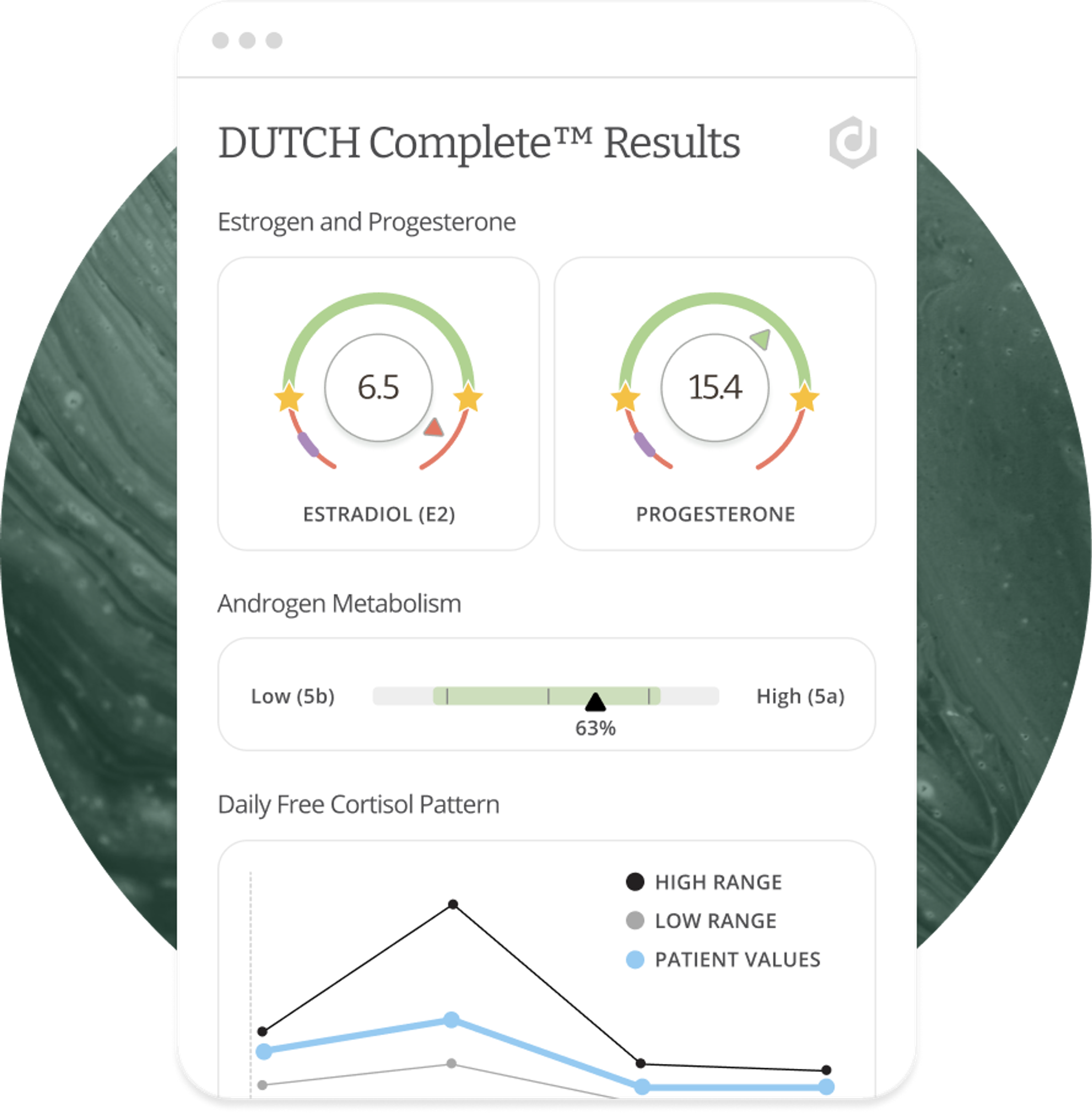
If you're already on HRT, the DUTCH test is particularly valuable. Instead of guessing whether or not your prescription is working, it shows exactly how your body is metabolising your hormones. This can help fine-tune your HRT dose and type with your doctor and explain why symptoms might persist, even when you're already on treatment.
We work directly with partner labs, so we can offer many tests at preferential rates for Peach clients.
DUTCH
test
Comprehensive hormone mapping
30+ markers
There's more you can do than HRT
HRT (Hormone Replacement Therapy) can be transformative for many women, but hormones are only one part of a bigger picture.
As hormones change in perimenopause, they can influence everything from sleep, mood and body composition to bone health, insulin sensitivity and cardiovascular risk. In fact, women can lose up to 10% of their bone density in the first five years after menopause, making nutrition and lifestyle support crucially important for long-term health.
We look at key factors beyond hormones - blood sugar, stress resilience, gut health, nutrient status and recovery - to ensure you body is completely supported as your hormones change.
Skip the guesswork.
Understand what’s really going on.

“My metabolism was frozen, and now it is working. I feel so much better. I’m less tired, I’ve lost weight, and even my concentration is improving. Positive thinking and great support from Flora was amazing - thank you. I could not have done it alone.”
- Pat, 48

“I would recommend Peach to anyone who’s at a crossroads with their health and not sure which way to turn, nutrition has been a lifesaver and a lifeline for me - thanks to working with Peach I was able to slowly get back to my old self.”
- Kim, 42
Book a free discovery call to explore what may be driving your symptoms and whether Peach is the right fit for you.
Your top questions, answered
-
Many women assume perimenopause is just about hot flushes and missed periods, but the early signs are often much more subtle. You might notice increased anxiety, disrupted sleep, brain fog, joint aches, histamine sensitivity, heavier periods, or weight gain around the middle - sometimes years before your periods change.
Often getting tested isn’t just about the sex hormones (oestrogen, progesterone and testosterone) which are in flux across perimenopause but about considering how these hormones interact with other hormone systems in the body - insulin, cortisol and thyroid hormones.
Connecting the dots and ensuring all of these areas are supported is helpful in managing symptoms. Standard GP blood tests can be limited and testing sex hormones in the blood isn’t recommended for women over 45, because of the daily fluctuations that are likely to be occurring.
We use the DUTCH test to look at your hormone metabolites in the urine across a full day, giving a much clearer picture of what’s actually happening. Many women in their late 30s or 40s approach us because they feel ‘off’ and wonder if their hormones have started to change. Hormone testing can help us understand if that’s the case or not, and tailor a personalised plan accordingly. Read more about our approach in our perimenopause guide.
-
During perimenopause and menopause, hormonal fluctuations can affect mood, sleep, energy, weight distribution, gut health and bone health. Nutrition can help support these changes by stabilising blood sugar, supporting the gut–hormone connection, reducing inflammation, and ensuring adequate intake of key nutrients such as protein, fibre and micronutrients.
Personalised nutrition support helps women adapt their diet to this life stage rather than fighting against their changing physiology.
-
HRT (Hormone Replacement Therapy) involves prescribing hormones to replace declining levels and can be highly effective for many women, particularly for menopausal symptoms.
Nutritional hormone support does not replace hormones but instead supports the body’s own hormone production, metabolism and regulation through diet, lifestyle and targeted supplements. The two approaches are not mutually exclusive - in fact, an individual on HRT may find it very useful to do a DUTCH Test (Dried Urine Test for Comprehensive Hormones) to help them get the best results from the prescription given.
While we don’t prescribe HRT ourselves as nutritional therapists, we work alongside a network of holistic GPs and gynaecologists that we have collaborated for many years. To ensure we are offering you the most individualised and integrated care, we can refer you to a trusted specialist where needed.
-
NHS menopause support is typically focused on whether or not to prescribe HRT, based on a short consultation and sometimes limited blood tests. That can be appropriate for many women, but it doesn’t always address why certain symptoms are particularly severe or persistent.
At Peach, we look at the wider picture. Menopause symptoms can be influenced by how efficiently your body clears oestrogen, the state of your gut microbiome (which plays a direct role in hormone metabolism), adrenal function, thyroid health, and nutrient status. Through comprehensive functional testing, we identify these underlyingfactors and create a plan that works alongside whatever treatment you may already be on - whether that’s HRT or not.